




Getting people to click your affiliate links is only one part of affiliate marketing. The real challenge is helping visitors understand a product, trust your recommendation, and feel confident enough to make a purchase.
This is where an affiliate marketing funnel becomes useful.
Instead of sending every visitor directly to a product page, you guide them through a series of steps. You attract the right audience, provide helpful information, introduce a relevant product, and encourage them to take action.
The good news is that you don’t need an expensive website or complicated software to build your first funnel. With a clear plan and a few basic tools, you can create one from scratch.
What Is an Affiliate Marketing Funnel?
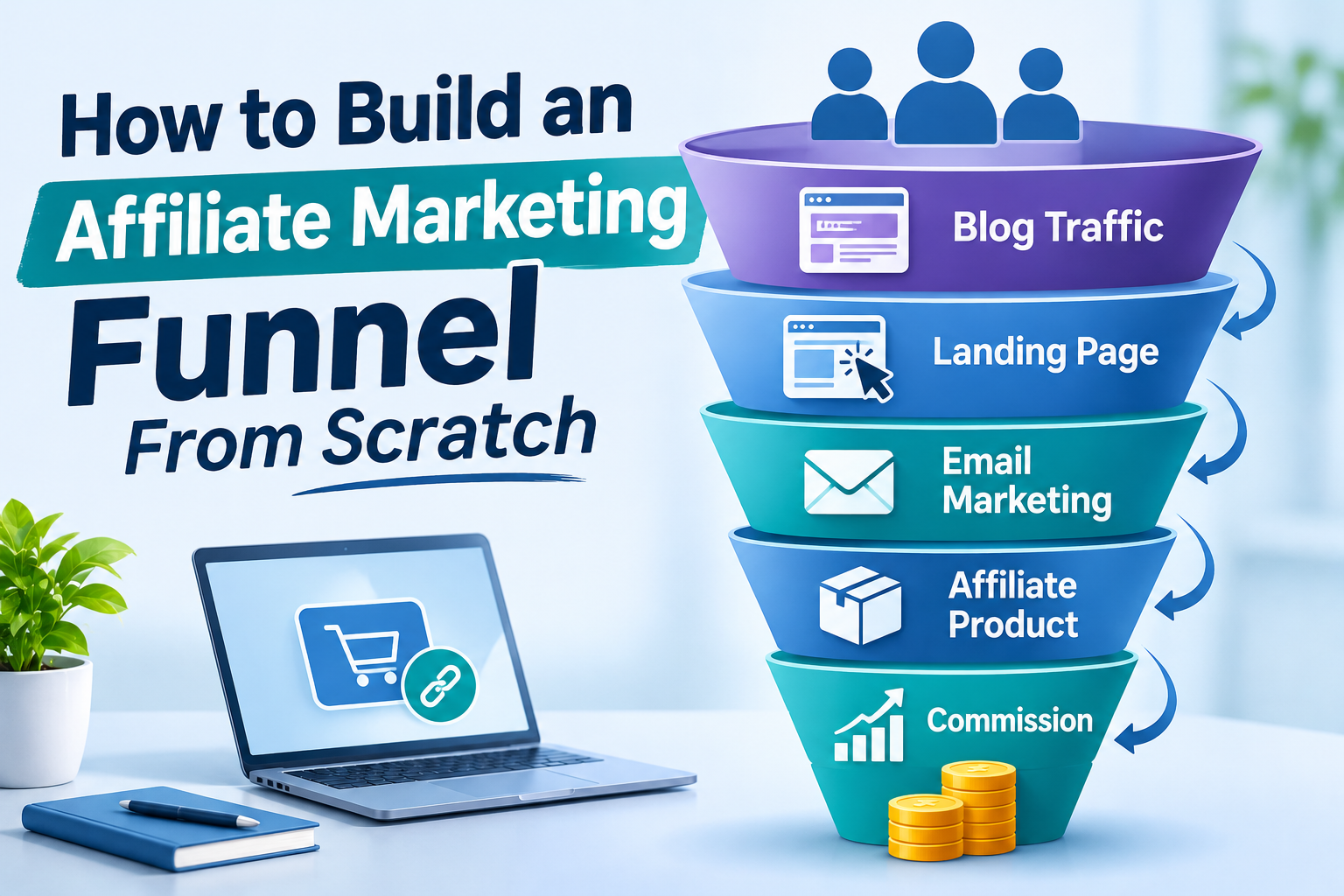
An affiliate marketing funnel is a step-by-step process that guides potential customers from discovering your content to purchasing a product through your affiliate link.
Think of it as a journey.
Someone might discover your blog through Google, read your product comparison, subscribe to your email list, receive a helpful recommendation, and eventually purchase through your affiliate link.
Each step brings that person closer to making an informed buying decision.
A typical affiliate marketing funnel has five stages:
- Awareness: People discover your content through search engines, social media, or other channels.
- Interest: They explore your content and learn about a problem or solution.
- Consideration: They compare products, read reviews, and evaluate your recommendation.
- Action: They click your affiliate link and make a purchase.
- Follow-up: You continue providing useful content to build trust and encourage future engagement.
Not every visitor will complete every stage. Your goal is to make the journey relevant and helpful for the people most likely to benefit from the product.
Step 1: Choose a Specific Affiliate Marketing Niche
Before creating your funnel, decide what type of products you want to promote.
Trying to promote everything to everyone makes it difficult to build trust. A specific niche helps you attract an audience with similar interests and purchasing needs.
Some popular affiliate marketing niches include:
- Technology and software
- Personal finance
- Health and fitness
- Beauty and skincare
- Online education
- Travel and lifestyle
- Home improvement
For example, suppose you choose the technology niche. Instead of promoting random products, you could focus on website-building tools, productivity software, hosting services, and useful business applications.
This makes your content more consistent and helps visitors understand what they can expect from your recommendations.
Practical tip: Choose a niche that combines audience demand, products worth recommending, and your own knowledge or interest.
Step 2: Understand Your Target Audience
A successful funnel starts with understanding the people you want to reach.
Ask yourself:
- What problems are they trying to solve?
- What questions do they search for online?
- What features matter most when choosing a product?
- What concerns might stop them from purchasing?
- How much are they willing to spend?
For example, if your audience consists of beginner bloggers, they might be searching for affordable hosting, easy website builders, keyword research tools, and beginner-friendly SEO software.
You can discover these questions through Google search suggestions, online communities, customer reviews, and keyword research tools.
The better you understand your audience, the easier it becomes to create content that matches their needs.
Step 3: Choose the Right Affiliate Products
Your funnel will only work well if the products you promote are relevant to your audience.
Look for products that:
- Solve a genuine problem.
- Offer useful features and clear benefits.
- Have reliable customer support.
- Provide transparent pricing and terms.
- Have a fair commission structure.
- Come from a company with a trustworthy reputation.
Don’t select a product only because it offers a high commission. A poor recommendation can damage your credibility and reduce the chances of future sales.
Before promoting a product, research it carefully. If possible, test it yourself so you can share practical observations rather than repeating information from its sales page.
Also, check the affiliate programme’s rules, including restrictions on advertising, coupon use, and link placement.
Step 4: Create Content That Attracts Potential Buyers
Now it’s time to bring people into your funnel.
Your content should answer questions that potential customers are already asking. You can use different content formats depending on where your audience spends time.
Here are some useful content ideas:
Informational content
- How-to guides
- Beginner tutorials
- Problem-solving articles
- Educational videos
Product research content
- Product reviews
- Product comparisons
- Best tools for a particular purpose
- Alternatives to popular products
For example, if you promote website hosting services, you could publish:
- How to Start a WordPress Website
- Best Hosting Services for Beginner Bloggers
- Hosting A vs Hosting B: Which One Should You Choose?
- Things to Check Before Buying Web Hosting
The first article attracts beginners, while the comparison and review articles reach readers who may already be considering a purchase.
Use SEO-friendly headings, helpful examples, and clear calls to action. Avoid filling every paragraph with affiliate links.
Step 5: Build a Landing Page
A landing page is a dedicated page designed to encourage visitors to take one main action.
In an affiliate marketing funnel, that action might be downloading a free guide, joining your email list, or exploring a useful resource.
A simple landing page can include:
- A clear headline that explains the benefit.
- A short description of what visitors will receive.
- A relevant image or preview.
- A simple signup form, if you’re collecting email addresses.
- A clear call-to-action button.
- A privacy notice explaining how submitted information will be used.
For example, if you’re promoting productivity software, you could offer a free checklist titled “10 Ways to Save Time With Productivity Tools.”
Visitors who find the checklist useful may be interested in learning about the software you recommend later.
You can create landing pages using tools such as WordPress page builders, Systeme.io, or other landing page platforms.
Keep the page simple. Too many links, pop-ups, and competing offers can distract visitors from the main action.
Step 6: Create an Email Sequence
Email marketing helps you stay connected with people who have shown interest but aren’t ready to purchase.
Instead of immediately sending promotional messages, provide useful information over time.
Here is an example of a simple five-email sequence:
Email 1 – Welcome Email
Thank the subscriber for joining and deliver the free resource you promised.
Email 2 – Helpful Information
Share practical tips related to the problem your audience wants to solve.
Email 3 – Introduce a Solution
Explain how a particular tool or product can help. Discuss its main features and limitations.
Email 4 – Product Review or Comparison
Share an honest review, comparison, or tutorial to help readers make a decision.
Email 5 – Recommendation
Provide your affiliate link with a clear explanation of who may benefit from the product.
Don’t send promotional emails every day just to generate clicks. Give subscribers useful reasons to open your messages.
Always obtain permission before sending marketing emails, include an unsubscribe option, and follow the applicable email marketing and privacy laws.
Step 7: Add Affiliate Links Naturally
Your affiliate links should appear where they genuinely help readers take the next step.
Good places to include them are:
- Within relevant product reviews.
- After a product comparison.
- In tutorials where a recommended tool is required.
- In useful resource sections.
- Inside relevant email recommendations.
Use clear calls to action such as:
- Check the Latest Plans
- Explore Product Features
- Visit the Official Website
- Compare Available Options
Avoid misleading buttons or claims such as “Guaranteed Results” unless they are genuinely supported.
You should also clearly disclose your affiliate relationship. For example:
“This article contains affiliate links. If you purchase through these links, we may earn a commission at no additional cost to you.”
Place the disclosure where readers can notice it before clicking an affiliate link. Follow the relevant advertising and affiliate disclosure requirements in your country.
Step 8: Track Your Funnel Performance
Publishing content and adding affiliate links is not enough. You need to understand what is working and where visitors are leaving.
Track these important metrics:
| Metric | What It Tells You |
|---|---|
| Website traffic | How many people visit your content |
| Landing page conversion rate | How many visitors complete the desired action |
| Email signup rate | How many visitors subscribe |
| Email click rate | How many subscribers click your links |
| Affiliate link clicks | How many people visit the merchant’s website |
| Conversion rate | How many clicks result in purchases |
| Earnings per click | Average affiliate earnings per tracked click |
You can use Google Analytics 4 for website activity, your email platform for campaign performance, and your affiliate dashboard for clicks, orders, and commissions.
For example, if an article receives plenty of visitors but very few affiliate link clicks, your recommendation might not be relevant enough or your call to action may not be clear.
If people click your links but don’t purchase, investigate the product price, offer, landing page, audience match, and merchant’s checkout experience.
Use these insights to improve your funnel instead of simply publishing more content.
A Simple Affiliate Marketing Funnel Example
Let’s understand the complete process with a practical example.
Imagine you want to promote an SEO tool to beginner bloggers.
Your funnel could look like this:
Step 1: Attract visitors
Publish a blog titled “How to Find Keywords for a New Website.”
Step 2: Build interest
Explain keyword research and common problems beginners face.
Step 3: Offer a free resource
Provide a downloadable keyword research checklist in exchange for an email subscription.
Step 4: Educate subscribers
Send helpful emails explaining keyword research methods and useful tools.
Step 5: Recommend a product
Publish an honest review of an SEO tool and include your affiliate link.
Step 6: Measure results
Track visits, signups, affiliate clicks, and confirmed sales.
This is a simple funnel, but it gives visitors a clear path from discovering your content to considering a product.
Common Affiliate Marketing Funnel Mistakes to Avoid
Even a well-planned funnel can perform poorly if you make avoidable mistakes.
1. Promoting too many products
Too many recommendations can confuse visitors. Start with a small number of relevant products.
2. Sending visitors directly to sales pages
Some visitors need information before they feel comfortable purchasing. Use helpful content to answer their questions.
3. Ignoring mobile users
Many people browse websites and emails on smartphones. Check that your landing pages, forms, and buttons work properly on smaller screens.
4. Writing promotional content without real value
Readers want useful information, not repeated sales messages. Explain product benefits, limitations, and suitable use cases.
5. Not testing your funnel
Check your forms, links, emails, and tracking before sending traffic to your funnel.
6. Expecting instant results
A funnel needs time, testing, and improvement. Your first version may not generate many sales, and that’s normal.
Final Thoughts
Building an affiliate marketing funnel from scratch doesn’t require expensive software or advanced technical knowledge. What matters most is understanding your audience and creating a useful journey around their needs.
Start with one niche, choose a relevant product, publish helpful content, and create a simple landing page. Add email marketing when you’re ready, track your results, and improve the steps that aren’t performing well.
Remember, a successful affiliate marketing funnel is not just about getting people to click links. It’s about helping the right people find solutions they can trust.
Frequently Asked Questions
1. Can I build an affiliate marketing funnel for free?
Yes. You can start with a free website or blog, free email marketing options, and basic analytics tools. Some platforms offer free plans with limitations.
2. Do I need a website to build an affiliate marketing funnel?
No. You can use social media, landing pages, email marketing, or video content to attract an audience. However, having your own website gives you more control over your content and long-term traffic strategy.
3. How many emails should an affiliate marketing funnel have?
There is no fixed number. Beginners can start with a sequence of three to five useful emails and adjust it based on subscriber engagement.
4. How long does it take to get affiliate sales?
It depends on your niche, audience, product, traffic quality, and marketing strategy. Some funnels may generate sales quickly, while others need several months of consistent work.
5. Which tools can I use to build an affiliate marketing funnel?
You can explore WordPress for content, Systeme.io for landing pages and email automation, MailerLite for email marketing, and Google Analytics 4 for website tracking. Compare their current features and pricing before choosing a platform.
6. Is affiliate marketing funnel automation necessary?
No. You can manage a small funnel manually in the beginning. Automation becomes useful when you have more subscribers, content, and follow-up tasks to manage.