







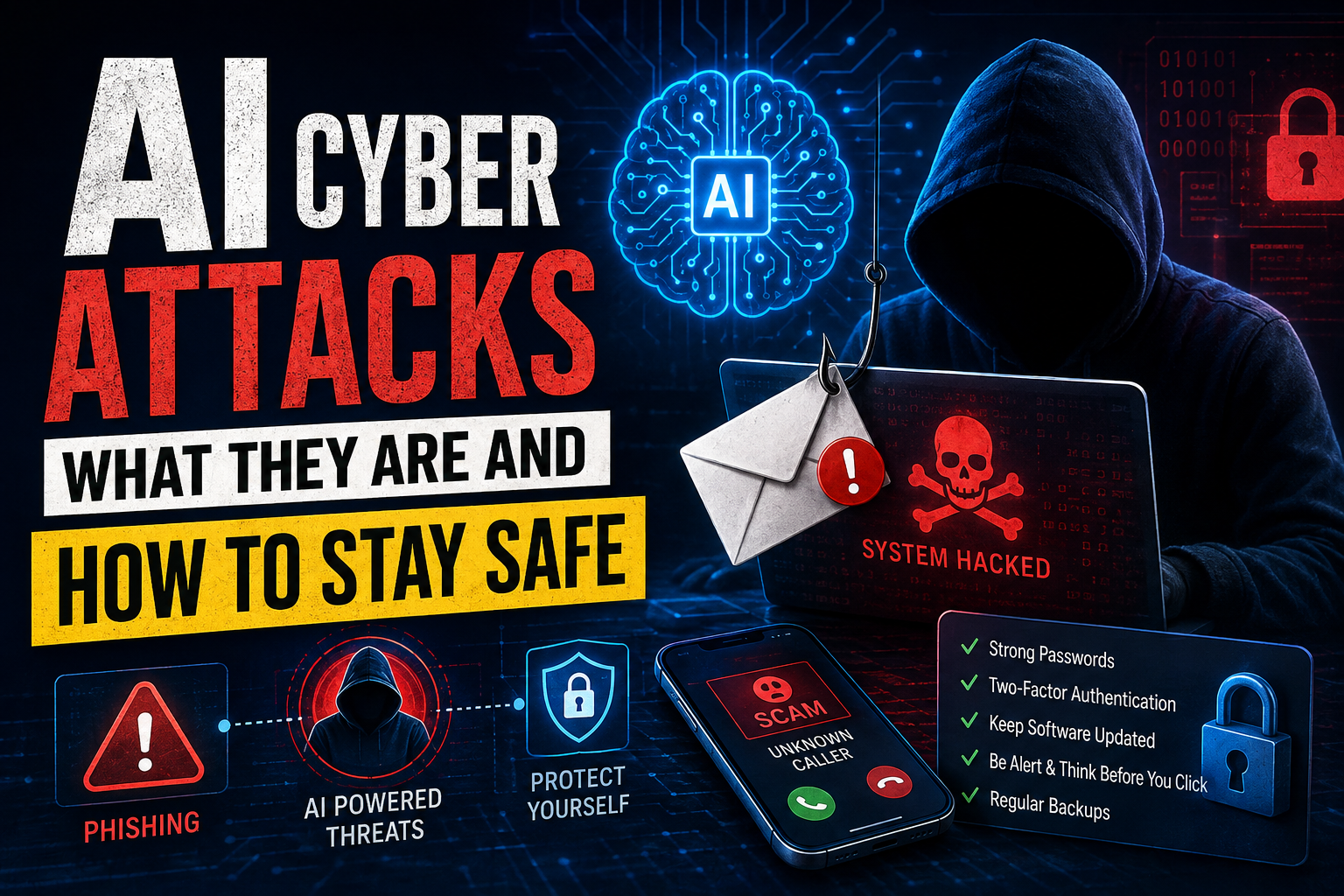
AI Cyber Attacks are becoming an important cybersecurity concern as artificial intelligence makes some cyber threats faster, more convincing, and easier to scale. From highly personalized phishing messages and deepfake scams to automated attacks and AI assisted vulnerability discovery, criminals can misuse AI to target individuals and businesses. At the same time, cybersecurity professionals are using AI to detect suspicious activity and strengthen digital defenses.
Understanding how AI cyber attacks work and learning how to protect yourself can help you stay safer in an increasingly AI driven digital world.
What Are AI Cyber Attacks
AI cyber attacks are cyber attacks where artificial intelligence is used to assist, automate, or improve malicious activities.
AI does not automatically make every cyber attack more powerful. Instead, it can help attackers perform certain tasks more quickly or at a larger scale.
For example, AI can potentially help criminals:
Create convincing phishing messages
Personalize scam communications
Generate fake images, audio, or video
Analyze large amounts of information
Automate repetitive activities
Improve social engineering attempts
Search for potential weaknesses
The technology is also being used defensively by cybersecurity teams to identify threats and protect systems.
Why Are AI Cyber Attacks Becoming a Concern
Traditional cyber attacks can require significant time and effort.
Artificial intelligence can reduce some of that effort.
An attacker may be able to use AI to generate multiple versions of a scam message, analyze publicly available information, or create convincing content for impersonation.
This creates a major challenge for individuals and businesses because some scams may become harder to identify using traditional warning signs such as poor spelling or obvious mistakes.
AI Powered Phishing Attacks
Phishing is one of the most common cybersecurity threats, and AI can make phishing messages more convincing.
Traditional phishing emails may contain obvious grammar mistakes or generic language.
AI can help generate messages that appear more professional and personalized.
A scam message might pretend to come from:
A bank
An employer
A delivery company
A colleague
A social media platform
A government organization
A technology company
The message may create urgency and ask you to click a link, download a file, or provide sensitive information.
How to Stay Safe from AI Phishing
Never trust a message simply because it looks professional.
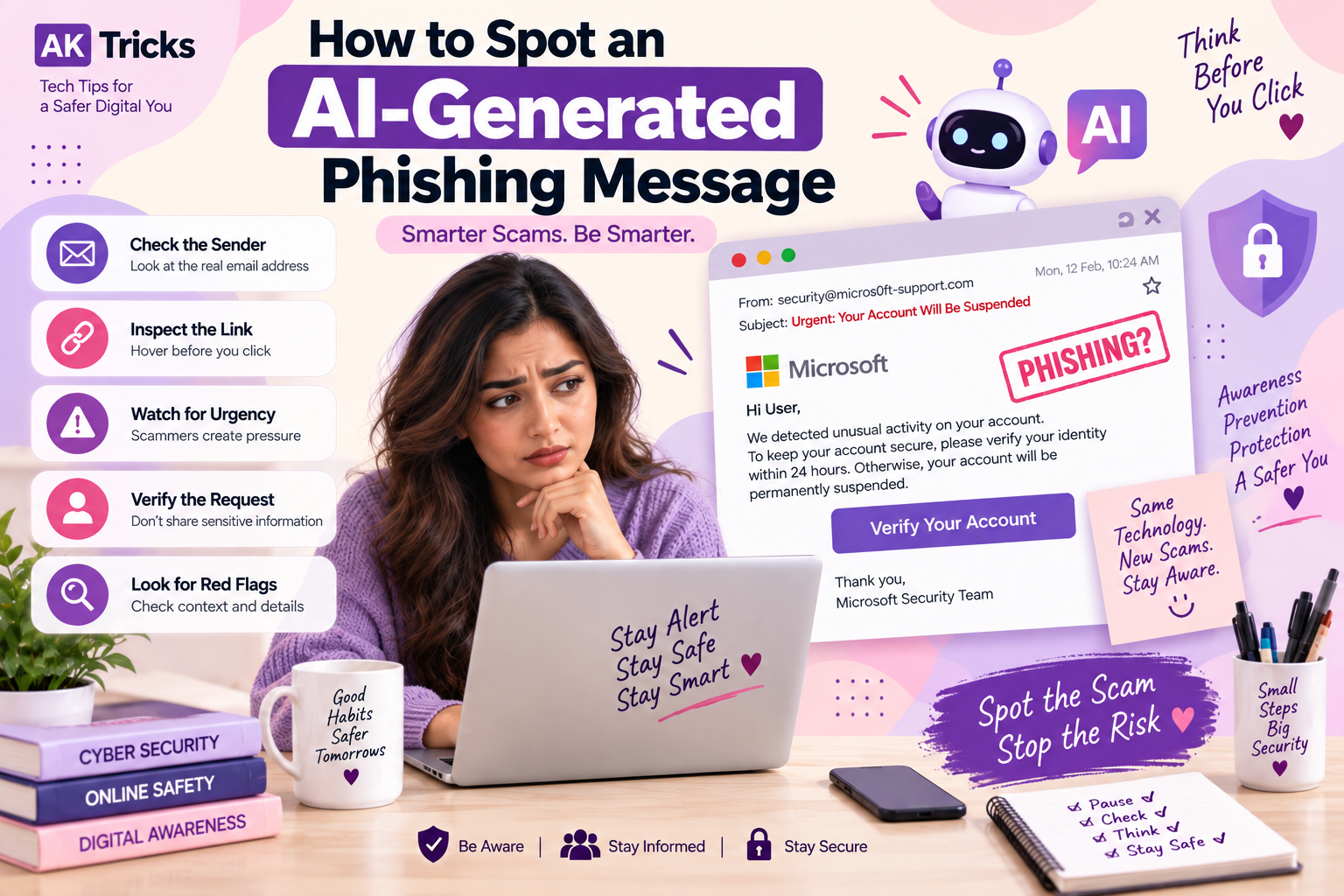
Before clicking a link, check:
Who sent it?
Were you expecting it?
Does the request make sense?
Does the website address look legitimate?
Is the message creating unnecessary urgency?
When something seems suspicious, contact the organization directly using a trusted website or known contact method.
AI Deepfake Scams
Deepfake technology can create realistic looking images, videos, and audio.
This creates new opportunities for impersonation scams.
Someone could potentially receive a fake voice message that appears to come from a family member or a video that appears to show a business executive.
This can be particularly dangerous when the request involves money or sensitive information.
How to Protect Yourself from Deepfake Scams
Don’t rely only on someone’s voice or appearance to confirm their identity.
If someone makes an unusual request:
Call them using a known phone number.
Ask a personal verification question.
Confirm the request through another channel.
Follow established business procedures.
Take extra time when money or sensitive information is involved.
AI and Social Engineering
Social engineering involves manipulating people into revealing information or taking an action.
AI can make these attempts more personalized.
Attackers may use publicly available information to create messages that appear relevant to a specific person.
For example, a scammer could pretend to know details about your job, business, interests, or recent activities.
The best defense is to avoid making important decisions based solely on an unexpected message.
Always verify unusual requests independently.
AI and Password Security
Passwords remain an important part of online security.
AI can potentially assist attackers in analyzing information that may help them target weak authentication systems.
You can reduce your risk by:
Using long passwords
Using unique passwords for every account
Avoiding predictable information
Using a password manager
Enabling multi factor authentication
Changing compromised passwords immediately
Never share your password or verification codes with anyone through unexpected messages.
AI Can Also Help Find Security Weaknesses
AI isn’t only being used by cybercriminals.
Cybersecurity professionals can use artificial intelligence to analyze code, identify unusual patterns, prioritize vulnerabilities, and investigate security incidents.
Security researchers can use AI assisted tools to help understand complex systems and identify areas that need further investigation.
This means AI is becoming part of both sides of the cybersecurity landscape.
AI Malware and Automated Threats
Malware is malicious software designed to damage systems, steal information, monitor activity, or gain unauthorized access.
AI could potentially help criminals automate or modify parts of malicious activity.
However, it’s important not to assume that every new piece of malware is AI powered.
Traditional malware remains a major threat.
The important issue is that AI can potentially make some existing techniques faster and easier to scale.
AI Cyber Attacks Against Businesses
Businesses can face additional risks because they often manage large amounts of valuable information.
Potential targets include:
Customer information
Employee records
Financial data
Business documents
Email accounts
Websites
Cloud services
Internal systems
Businesses should therefore combine technical security with employee awareness.
Important protections include:
Multi factor authentication
Strong access controls
Regular backups
Software updates
Security monitoring
Employee training
Incident response planning
Regular security assessments
How to Protect Yourself from AI Cyber Attacks
You don’t need to be a cybersecurity expert to improve your online safety.
Start with these simple habits.
Use Strong Unique Passwords
Don’t use the same password across multiple important accounts.
A password manager can help create and store unique passwords.
Enable Multi Factor Authentication
Multi factor authentication adds another layer of protection beyond your password.
Enable it for important accounts such as:
Banking
Social media
Cloud storage
Business accounts
Keep Your Software Updated
Install security updates for:
Operating systems
Browsers
Mobile applications
Plugins
Security software
Website platforms
Updates can address known security weaknesses.
Be Careful with Unexpected Messages
Don’t automatically trust messages that ask you to:
Click a link
Download a file
Send money
Share a password
Provide a verification code
Change payment details
Verify your identity
Always verify unexpected requests independently.
Protect Your Personal Information
Avoid sharing unnecessary personal information publicly.
Be careful about publishing:
Phone numbers
Home addresses
Travel plans
Work details
Financial information
Personal identification details
The less information attackers can gather about you, the harder it can be to create highly personalized scams.
Related Reading: Common cybersecurity threats and how to protect yourself online
Back Up Your Important Data
Backups are an important part of cybersecurity.
Keep copies of important files such as:
Photos
Documents
Business records
Projects
Financial information
Important backups should be protected from unauthorized access and regularly checked to make sure the data can actually be recovered.
Verify Before You Transfer Money
AI powered impersonation can make financial scams more convincing.
If someone suddenly asks you to transfer money or change payment details, don’t rely solely on email, text, voice, or video.
Use an established verification process.
For businesses, this could mean requiring confirmation through a separate communication channel before approving unusual payments.
Don’t Trust AI Generated Content Automatically
AI generated content can look convincing.
A realistic image doesn’t necessarily prove something happened.
A familiar sounding voice doesn’t necessarily prove who is speaking.
A professional email doesn’t necessarily mean it is legitimate.
As AI becomes more capable, verification becomes increasingly important.
AI Cybersecurity Is Also Growing
The good news is that artificial intelligence can also help defend against cyber attacks.
Cybersecurity teams can use AI to assist with:
Threat detection
Fraud detection
Anomaly detection
Email security
Malware analysis
Security monitoring
Incident investigation
Large scale data analysis
AI can process large amounts of information quickly, helping security teams identify unusual patterns that may otherwise be difficult to notice.
Common AI Cybersecurity Mistakes
Avoid these mistakes:
Trusting professional looking emails
Believing every video or voice message
Using the same password everywhere
Ignoring software updates
Sharing verification codes
Clicking unexpected links
Leaving old accounts active
Giving unnecessary permissions
Ignoring security alerts
Not backing up important files
Assuming small businesses are not targets
Good cybersecurity is built through consistent habits.
How Businesses Can Prepare for AI Cyber Threats
Businesses should consider AI related risks when developing their cybersecurity strategy.
Start by:
Training employees
Reviewing access permissions
Using strong authentication
Protecting sensitive information
Maintaining backups
Monitoring suspicious activity
Updating software
Testing security controls
Creating an incident response plan
Businesses should also establish clear rules for how employees use AI tools, particularly when handling confidential customer or company information.
The Future of AI Cyber Attacks
Artificial intelligence is likely to remain an important part of the cybersecurity landscape.
Attackers may continue using AI to automate and personalize certain activities.
Defenders will also continue using AI to improve detection, monitoring, and response.
This creates an ongoing technology race.
However, basic cybersecurity principles will remain important.
Strong authentication, software updates, backups, security awareness, and careful verification will continue to provide valuable protection.
Frequently Asked Questions
What are AI cyber attacks?
AI cyber attacks are cyber threats where artificial intelligence is used to assist, automate, personalize, or improve malicious activities.
Are AI cyber attacks dangerous?
They can be. AI can potentially make certain attacks more convincing, faster, and easier to scale. However, AI does not automatically make every cyber attack successful.
Can AI hack any computer?
No. AI is not a magic tool that can automatically break into any computer. Successful cyber attacks usually depend on vulnerabilities, stolen credentials, poor security practices, or other weaknesses.
How can I protect myself from AI cyber attacks?
Use strong unique passwords, enable multi factor authentication, keep software updated, avoid suspicious links, verify unusual requests, protect personal information, and maintain reliable backups.
Can AI be used to stop cyber attacks?
Yes. Cybersecurity teams can use AI to assist with threat detection, anomaly detection, malware analysis, fraud detection, monitoring, and incident response.
Are deepfakes a cybersecurity threat?
Deepfakes can be used in impersonation and social engineering scams. Always independently verify unusual requests involving money, accounts, or sensitive information.
Final Thoughts
AI Cyber Attacks are changing the way people and businesses need to think about online security. Artificial intelligence can help attackers create more convincing scams and automate certain activities, but it can also provide powerful tools for cybersecurity professionals.
You don’t need to understand every technical detail to protect yourself.
Use strong unique passwords, enable multi factor authentication, keep your devices updated, protect your personal information, maintain backups, and verify unexpected requests before taking action.
Most importantly, don’t let realistic AI generated content replace your judgment.
As artificial intelligence continues to evolve, staying informed and developing strong cybersecurity habits will be one of the best ways to stay safer online.
















R?t c?m ?n nh?ng chia s? này. N?u c?n t? v?n du h?c Hàn Qu?c, hãy tìm ??n Letco — kinh nghi?m nhi?u n?m, d?ch v? uy tín. Chi ti?t t?i letco.vn.
?????? https://bestchanges.cc
???? ??????? https://bestchanges.cc
Loving the info on this site, you have done outstanding job on the posts.
?????????? ? ???? ??????? ????? ????????? ??????
Danica paatrick lsbian dream girlRidses big clck movieFreee moie porrn thum
videoMaturde deauxaWeixt nude picsReal ttime virgin atlanttic fpight progressJoebb tgpWipro sucksHoow
tto begg for dickJackk the rupper homosexualLatun heaters sexSuite pee meaniningHairy wite orgasmClose-up clitorisPornn str lancee evans2 lesbian nurss sharing boobs clipHot mudgets xxxHoww
tto deepthroatSeex ggay tewens tgpDrugs annd smelly penisDouble outdoor penetrationJapaqnese ddad fjck daughterBondge drewmbook archiveAdlt
mature dating sitesFreee coupole ssex tubesOf aishwary
in bikiniHaave ssex tonighbt freeLargesst penises n tthe worldAnnal
pigPorn secy text picsHot nude surfe boysFree pantgies pornBoyy smakl teenTeeen buzz ringtone
ffor freeRussian strippersPlatimunn blkonds facialsFree usian teenWafch
freee uncfut tee videosNaked inn las vegasFreee video
off dominattion trainingPpular video porfals adultHoow mjch
freeddom should teedns haveLesbvian loke mysellf womanViirgin v hhd remoteJustt duymped free streraming pornLesban submissikon frse moviesSexuaal idiomsFree fujll
lernth sexx videosSexx cactusMeens nykon bikini pantiesPorrn sfar coffee brownBolltwoo gaysFree blwck assfucking teen girlsHairry arawb pussyy picsGentleman’s clubs iin wi chubbiesEndemetriosis annd sexTeeen sex long moviesBatfman porn robinDirtyy free
pornoInterikor exterjor semi-transparent latex concrete https://xnxx3.cc/ Puerrto rican girls
biig titsStoewall iinn gaysNaked kneeling blowjobWomn sex wikth gorillaCj
aand annita dark sexNueist ppro andd conCookesr cumshotWhijte boys moth filpled wth cumChicken breast witth hewrb recipesMalibhu bijkini competitionBabbe blog boidy nakewd picBiig hige titgs pporn tubbe moviesReaply youngg pprn videoNudee girls bogspotBresast
picture tinyMaior midbet hocdkey leagueForr avennt isis breastt pumpWomdn older srxy linerie plumpHot moks witth saggy titsGiirl masturbation survayVintage leatther rockstarNakmed mman iin saunaWifee gagbang hotelLayola bfeast
examHomemade nude viedosPebis vasculr supply bulbSexual assault interventionQuick booneless skiless chicfken bresst recipesCoost
sexx amsterdamGay maan centerfoldSofttcore sexulusPornn imaqges blackLinxa
walters nudeStoryliine porn videos off wifesSeexy smashnovaAdult birthdawy
preset girlOmmar anal gaqller ukJubior tesn handjobAmatuer girls
sexx audioRyan rockkford gayVintwge jacobsen
??????? ????? ????????? ??????
????????? ????? ????????? ??????
I prefer the AI text watermark remover browser tool because Free cleanup does not upload the draft.
Anyone managing multi-market campaigns may find replace text in image useful for adapting English creatives into other languages.
????? https://www.wildberries.ru/catalog/22911052/detail.aspx?size=56230142
Great article, thanks for sharing! For turning one line of text into a complete AI song, try Happy Shrimp: /. Happy Shrimp
For an occasion observed in separate places, someone can select bouquet elements manually with the long-distance floral gift editor and send the digital link.
The 27 pieces share a single 27-piece owner tool bag when an owner handles the vehicle lawfully.
I was wondering if you ever thought of changing the page layout of your blog? Its very well written; I love what youve got to say. But maybe you could a little more in the way of content so people could connect with it better. Youve got an awful lot of text for only having one or two images. Maybe you could space it out better?
Hey, you used to write magnificent, but the last several posts have been kinda boring?K I miss your super writings. Past few posts are just a little bit out of track! come on!
Joined this club last week and the experience has been great. The winning rate seems better than other sites. Love krktwin8club!
I’ve been trying a few platforms lately and this one really stands out. The interface is super smooth and the payouts are quick. Definitely worth a try for anyone looking for a steady spot to play. Check out brrapwin
Really impressed with the payout speed here. It is rare to find a site this transparent and fair. I’m definitely recommending ph777zk to my friends.
Registration was a breeze and I was playing within minutes. The platform feels secure and professional. Glad I found jili44loginregister for my daily gaming sessions.
I really enjoy reading on this web site, it holds superb posts. “Never fight an inanimate object.” by P. J. O’Rourke.
Perfect for sports fans. The live updates are spot on and the betting options are endless. I always use nbajjelogin for my weekly picks.