








AI marketing mistakes can make even a professional brand look less trustworthy. AI can help businesses create content, analyze customers, write advertisements, generate ideas, and automate repetitive marketing tasks, but using it without a clear strategy can make your brand sound generic and disconnected.
The problem is not using AI in marketing. The problem is letting AI replace the human thinking behind your marketing.
When every caption sounds similar, every email feels automated, and every piece of content uses the same predictable language, customers can quickly notice that something feels different.
AI should help your brand communicate better, not make your brand sound like everyone else.
What Is AI Marketing
AI marketing means using artificial intelligence to support different parts of your marketing process.
Businesses can use AI for:
- Content ideas
- Blog writing
- Social media content
- Email marketing
- Customer research
- Audience analysis
- Ad copy
- Marketing automation
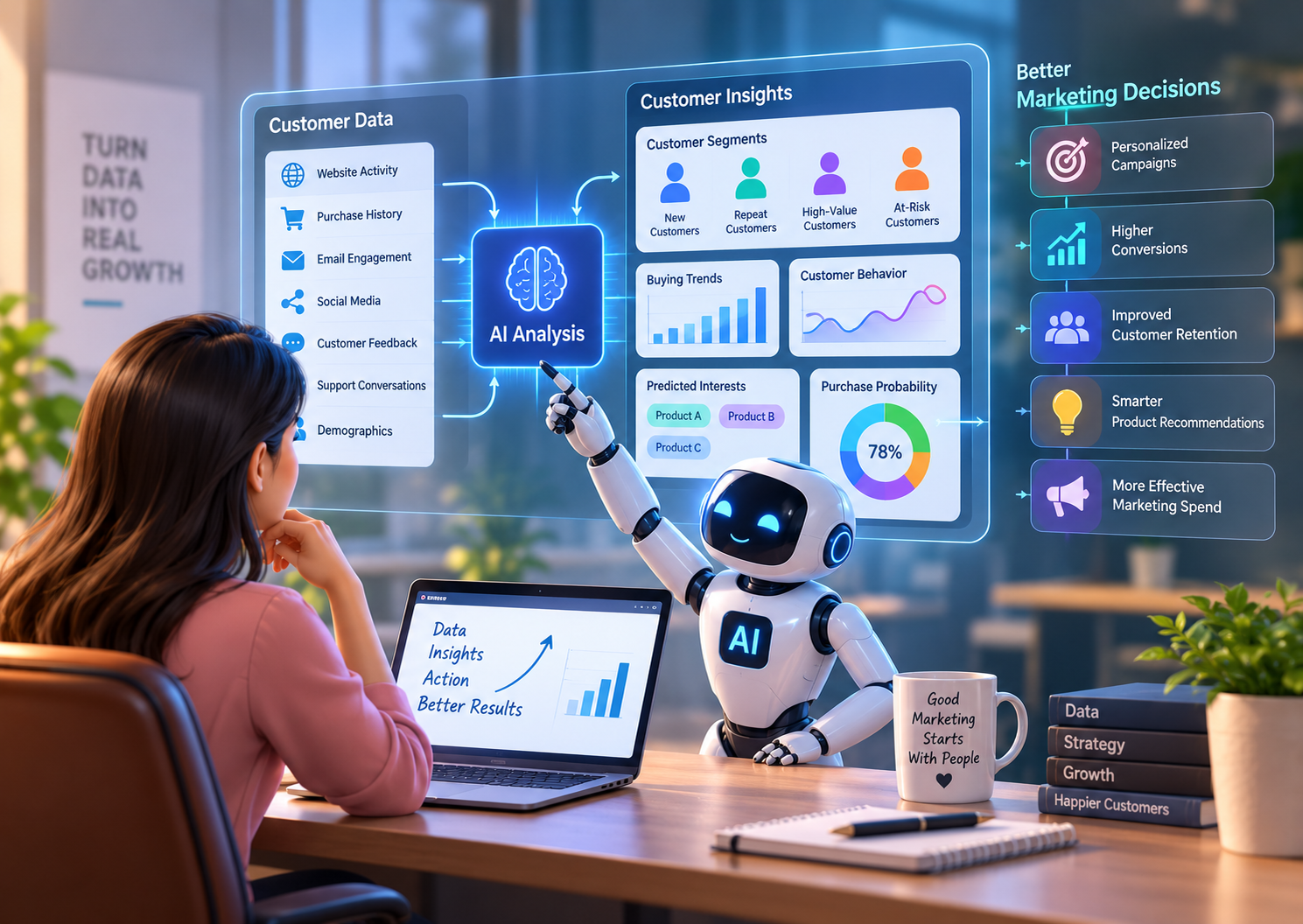
- Customer segmentation
- Data analysis
- Lead generation
- Personalization
- Competitor research
Used correctly, AI can save time and help marketers make better decisions.
But there is an important difference between using AI as a marketing assistant and letting AI run your entire marketing process.
That difference is where many brands make mistakes.
1. Publishing AI Content Without Human Editing
One of the biggest AI marketing mistakes is copying AI-generated content and publishing it immediately.
AI can produce grammatically correct writing in seconds, but correct grammar does not automatically mean good marketing.
For example, imagine a skincare brand posting:
“Discover innovative skincare solutions designed to elevate your daily beauty routine.”
There is nothing technically wrong with the sentence.
But it could belong to hundreds of different brands.
It does not explain:
- Who the product is for
- Why customers should care
- What makes the product different
- What problem it solves
- Why someone should trust the brand
AI-generated content needs a human review before publication.
How to Fix It
Use AI for the first draft, then add your own:
- Brand experience
- Product details
- Customer examples
- Opinions
- Stories
- Local information
- Industry knowledge
- Unique observations
Think of AI as your starting point rather than your final editor.
2. Making Every Piece of Content Sound the Same
AI tools often have predictable writing patterns.
If you use the same prompts repeatedly, your:
- Instagram captions
- Blog posts
- Emails
- Product descriptions
- LinkedIn posts
- Advertisements
may start sounding almost identical.
Your audience may not know exactly why the content feels repetitive, but they can sense that your brand has lost its personality.
For example, if every post contains phrases such as:
- “In today’s fast-paced world”
- “Unlock your potential”
- “Transform your business”
- “Take your strategy to the next level”
your content can quickly become predictable.
How to Fix It
Create a clear brand voice guide.
Define:
- How your brand speaks
- Words you use often
- Words you avoid
- Your preferred sentence length
- Your personality
- How formal or casual you want to sound
- How you communicate with customers
Then give this information to your AI tool when creating content.
Most importantly, edit the final version so it sounds like your business, not a generic marketing template.
3. Using AI to Create Fake Personalization
Personalization is one of the most useful applications of AI marketing.
But bad personalization can have the opposite effect.
For example:
“Hi John, we know you love amazing products and exciting experiences!”
This does not feel personal.
It feels automated.
Real personalization should be based on useful information about the customer’s behavior or needs.
For example, an online store could recommend products based on:
- Previous purchases
- Browsing behavior
- Product category
- Customer preferences
- Purchase frequency
Instead of simply inserting someone’s first name into an email, use AI to understand what information is actually useful to that customer.
Better Approach
Instead of:
“John, check out our amazing new products!”
Try something based on real behavior:
“Since you purchased our running shoes last month, here are three accessories that can help complete your running setup.”
That feels more relevant because the personalization has a purpose.
4. Automating Everything
Automation is useful, but too much automation can make a brand feel distant.
Imagine a customer sends a detailed complaint and receives:
“Thank you for your valuable feedback. We appreciate your continued support.”
The customer may feel ignored rather than helped.
AI can handle many repetitive tasks, but not every customer interaction should be automated.
Tasks AI Can Help With
AI can be useful for:
- Sorting customer questions
- Creating initial responses
- Summarizing conversations
- Categorizing leads
- Sending reminders
- Answering common questions
- Organizing customer data
Tasks That May Need Humans
Human involvement is especially important for:
- Serious complaints
- Sensitive customer situations
- Complex questions
- Refund disputes
- High-value customers
- Important business negotiations
The goal should not be:
Automate everything.
The better goal is:
Automate what makes sense and keep humans involved where they add value.
5. Creating Content Just Because AI Makes It Easy
AI makes content creation extremely fast.
That can become a problem.
When content becomes too easy to produce, businesses may start publishing too much content without asking whether it is actually useful.
You could create:
- 20 social posts
- 10 blog ideas
- 5 emails
- 30 captions
in a short time.
But more content does not automatically mean better marketing.
If the content does not solve a problem, answer a question, entertain the audience, or provide something useful, it may simply create more noise.
Ask These Questions Before Publishing
Before creating another AI-generated post, ask:
Who is this for?
What problem does it solve?
Why should someone care?
What makes this different from competing content?
What action should the reader take?
If you cannot answer these questions, you may not need another piece of content.
6. Using AI Without Understanding Your Audience
AI can analyze large amounts of information, but it does not automatically understand your business.
You still need to know:
- Who your customers are
- What they want
- What problems they face
- Why they choose your product
- What stops them from buying
- What questions they ask
- What language they use
For example, a business selling expensive professional software should not necessarily communicate in the same way as a brand selling affordable products to college students.
AI can help analyze the audience, but marketers still need to provide the right context.
How to Fix It
Before asking AI to create a marketing campaign, provide information such as:
- Target audience
- Age group
- Location
- Customer problems
- Product benefits
- Price range
- Buying objections
- Competitors
- Brand personality
- Marketing goal
The better the input, the more useful the output can become.
7. Using AI Images and Videos That Do Not Match Your Brand
AI is now widely used for creating marketing visuals.
Businesses can generate:
- Product concepts
- Social media graphics
- Advertisements
- Short videos
- Backgrounds
- Illustrations
- Marketing mockups
But there is another common mistake:
Creating visuals that look impressive but do not look like the brand.
For example, imagine a company always uses clean, minimal product photography.
Suddenly, its social media starts featuring highly dramatic AI images with unrealistic backgrounds, strange objects, and completely different visual styles.
The content may get attention, but the brand identity becomes inconsistent.
How to Fix It
Create visual guidelines for AI-generated content.
Define:
- Brand colors
- Fonts
- Image style
- Composition
- Lighting
- Background style
- Product placement
- Character appearance
- Photography style
AI should help you produce content within your brand identity, not randomly change it every week.
Why Fake-Looking AI Marketing Can Hurt Your Brand
Customers do not only evaluate what you sell.
They also evaluate how your business communicates.
If your marketing feels:
- Generic
- Repetitive
- Overly automated
- Emotionless
- Inconsistent
- Overly promotional
people may become less interested in the brand.
Trust is built through consistency and genuine communication.
AI can help you produce content faster, but speed should not come at the cost of authenticity.
How to Make AI Marketing Feel More Human
You do not have to stop using AI.
Instead, build a process where humans and AI work together.
Step 1 Start With Your Own Idea
Before opening an AI tool, decide what you actually want to communicate.
Step 2 Give AI Real Context
Provide information about your product, audience, goals, and brand voice.
Step 3 Generate Multiple Ideas
Ask AI for different angles instead of accepting the first answer.
Step 4 Add Real Experience
Include customer questions, examples, stories, data, or observations from your business.
Step 5 Edit the Language
Remove unnecessary buzzwords and generic phrases.
Step 6 Check Accuracy
Make sure facts, prices, product details, statistics, and claims are correct.
Step 7 Add Your Brand Personality
Make the final content sound like something your business would actually say.
Step 8 Review Before Publishing
A human should remain responsible for the final marketing message.
AI Marketing Should Support Your Strategy
AI is not a marketing strategy by itself.
You still need:
- A clear audience
- A marketing goal
- A strong offer
- Good positioning
- Useful content
- Consistent branding
- Customer research
- Measurement
For example, AI can help you create ten advertisement variations.
But AI cannot magically make a weak product offer attractive.
Similarly, AI can generate hundreds of social media ideas, but it cannot replace the need to understand what your audience actually wants.
A Simple AI Marketing Workflow
Here is a practical workflow you can use:
Research ? Strategy ? AI Assistance ? Human Editing ? Publish ? Measure ? Improve
Research
Understand your customers and competitors.
Strategy
Decide what you want your marketing to achieve.
AI Assistance
Use AI for research, ideas, drafts, analysis, and repetitive tasks.
Human Editing
Add your expertise and brand personality.
Publish
Share the final content through the right channels.
Measure
Look at useful metrics such as:
- Clicks
- Leads
- Conversions
- Engagement
- Sales
- Customer responses
Improve
Use the results to make your next campaign better.
This approach keeps AI involved without allowing it to control everything.
A Quick AI Marketing Mistake Checklist
Before publishing AI-assisted marketing content, ask:
? Does this sound like our brand?
? Does it provide something useful?
? Is the information accurate?
? Does it actually speak to our target audience?
? Does it contain unnecessary AI-style phrases?
? Have we added human insight?
? Are the images consistent with our brand?
? Are we using personalization for a real reason?
? Does the content have a clear purpose?
? Has someone reviewed it before publishing?
If several answers are no, the content probably needs another round of editing.
The Future of AI Marketing
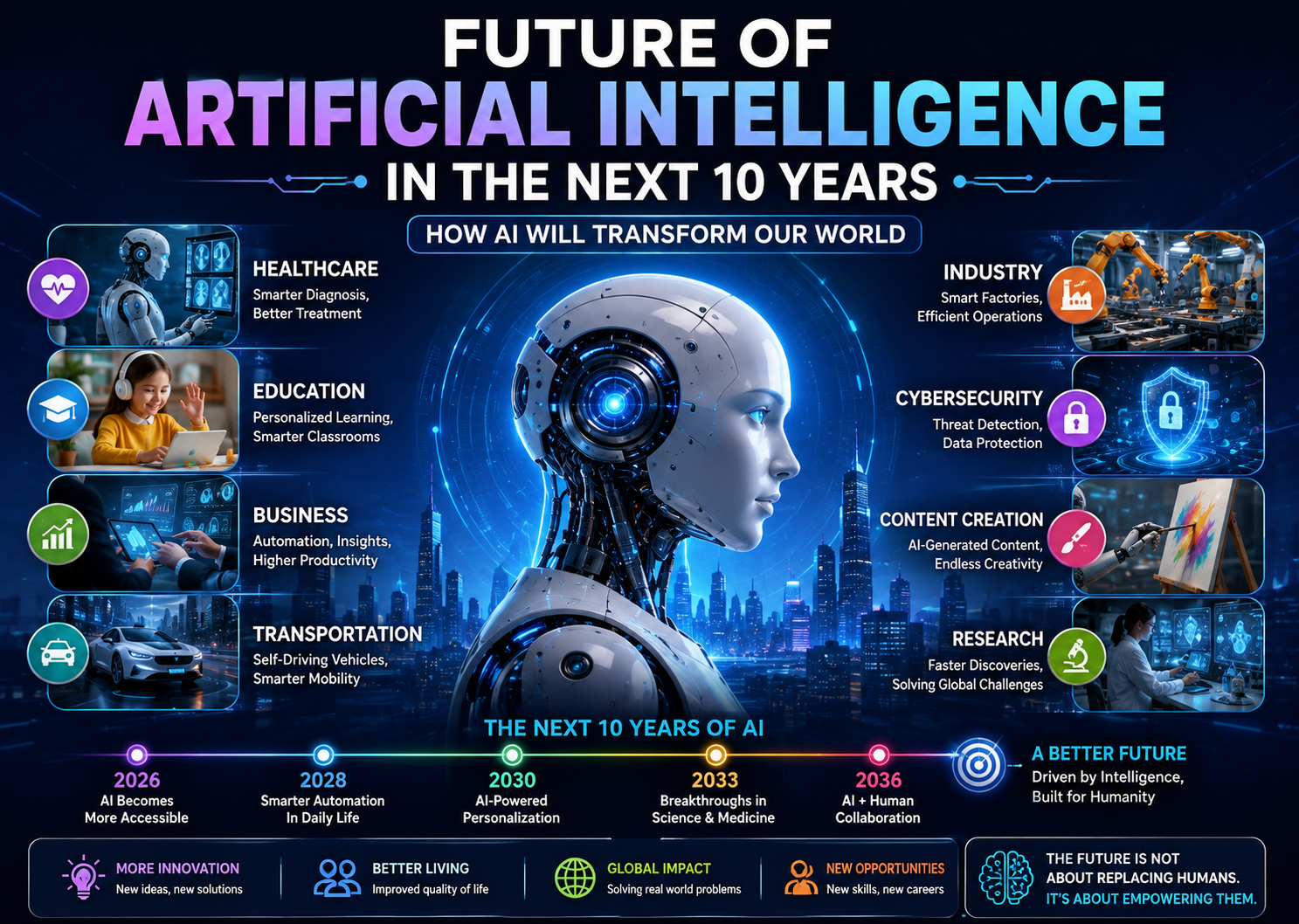
AI will continue to become a bigger part of marketing.
Businesses can use it to work faster, understand customers, personalize experiences, analyze data, and automate repetitive tasks.
But as AI-generated content becomes more common, authenticity can become even more important.
When everyone can generate a polished advertisement in seconds, the brands that stand out may be the ones with something more valuable behind the technology:
A clear point of view, real expertise, and a recognizable personality.
The goal is not to hide the fact that you use AI.
The goal is to make sure that AI helps your brand communicate better rather than making it sound like every other brand using the same tool.
Final Thoughts
The biggest AI marketing mistakes usually happen when businesses focus too much on speed and automation and not enough on strategy and human connection.
AI can help you brainstorm ideas, create drafts, analyze information, personalize campaigns, and automate repetitive work.
But your brand still needs human judgment.
Use AI to handle the repetitive work.
Use your team to add experience, creativity, emotion, and strategy.
That balance can help you get the benefits of AI without making your marketing feel fake.
Frequently Asked Questions
What are the biggest AI marketing mistakes?
Common mistakes include publishing unedited AI content, using generic language, over-automating customer communication, creating fake personalization, ignoring the target audience, and using inconsistent AI-generated visuals.
Can AI make a brand look fake?
Yes. If AI-generated content is repetitive, generic, overly automated, or inconsistent with the brand’s personality, customers may feel that the communication lacks authenticity.
Should businesses stop using AI for marketing?
No. AI can be useful for research, content ideas, analysis, personalization, automation, and many other marketing tasks. The important part is maintaining human oversight and strategy.
How can I make AI-generated content sound more human?
Give AI detailed information about your brand and audience, then edit the output using your own experience, examples, opinions, and natural language.
Can AI replace marketers?
AI can automate and assist with many marketing tasks, but effective marketing still requires strategy, creativity, customer understanding, judgment, and decision-making.
Is AI-generated content bad for SEO?
AI assistance itself is not the main issue. The more important question is whether the final content is useful, accurate, original, relevant, and created to genuinely help the audience.
How can small businesses use AI marketing?
Small businesses can use AI for content ideas, customer research, social media planning, email drafts, advertising ideas, data analysis, lead qualification, and repetitive marketing tasks.
















QS88 có khá nhi?u l?a ch?n gi?i trí t? casino tr?c tuy?n, th? thao ??n game bài và n? h?. Mình thích cách b? trí giao di?n vì các danh m?c không quá khó tìm. Thông tin v? t?ng s?n ph?m c?ng ???c trình bày khá tr?c quan. Ng??i dùng nên ??c k? ?i?u ki?n và quy ??nh tr??c khi s? d?ng d?ch v?.