







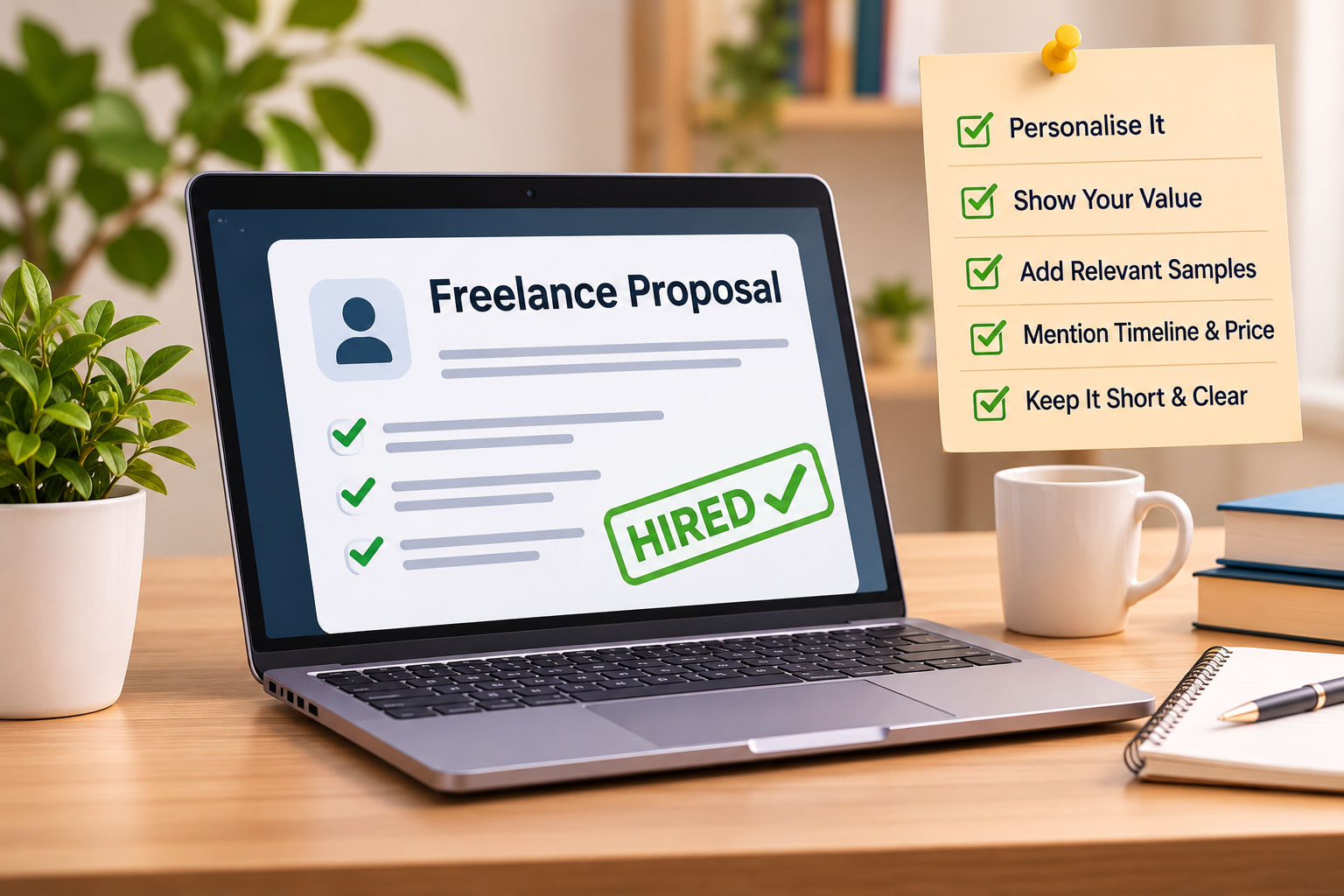
Finding freelance projects is not always difficult, but convincing a client to choose you can be challenging. Many freelancers apply for the same project, and clients often receive dozens of proposals within a short time. If your proposal looks generic or fails to explain how you can help, it may get ignored.
Learning how to write a freelance proposal that gets noticed can help you stand out from other applicants, build trust, and increase your chances of getting hired. A good proposal does not need complicated words or several pages of explanation. It needs to show that you understand the client’s requirements and have a clear plan to deliver the work.
Let’s understand how to write a proposal that makes clients interested in working with you.
What Is a Freelance Proposal?
A freelance proposal is a short professional message that you send to a potential client when applying for a project. It explains who you are, what you understand about the project, how you plan to complete it, and why the client should consider hiring you.
A proposal is more than a simple introduction. It is your opportunity to demonstrate that you have read the job description carefully and understand what the client needs.
Whether you work as a graphic designer, content writer, web developer, virtual assistant, or digital marketer, a well-written proposal can make a positive first impression.
1. Read the Project Description Carefully
Before writing your proposal, take time to understand the client’s requirements. Many freelancers make the mistake of sending the same message to every client. This approach rarely works because clients want someone who understands their specific project.
Pay attention to:
- The main tasks and responsibilities.
- The skills and experience required.
- The expected delivery time.
- Any specific tools or software mentioned.
- The problems the client wants to solve.
For example, if a client needs a website redesigned, do not simply write that you are a web designer. Mention that you understand they want a cleaner layout, easier navigation, and a better mobile experience.
This small change makes your proposal feel more relevant.
2. Start With a Personalised Opening
The first few lines of your proposal matter because they give the client a reason to continue reading. Avoid opening with long introductions or common phrases such as “Dear Sir/Madam, I am highly interested in your project.”
Instead, start by referring to something specific in the project description.
For example:
“I noticed that you are looking for a graphic designer to create social media posts for your business. I can help you develop clean, consistent designs that match your brand identity.”
This opening tells the client that you have read the job requirements and are responding to their actual needs.
If the client’s name is available, you can use it naturally. However, avoid guessing their name or adding unnecessary personal details.
3. Explain How You Can Help the Client
Clients are not just looking for someone with skills. They want someone who can solve their problem and deliver the expected result.
Instead of focusing only on yourself, explain what you can do for the project.
For example, rather than writing:
“I have experience in graphic designing and know Photoshop, Illustrator, and Canva.”
Try writing:
“I can create visually consistent social media designs using Canva and Adobe Illustrator, ensuring that each post follows your brand colours, typography, and overall style.”
The second example connects your skills directly to the client’s requirements.
Keep your explanation relevant. You do not need to mention every skill you have if it does not relate to the project.
4. Show Relevant Experience and Work Samples
Clients often want proof that you can complete the work before hiring you. This is where your portfolio becomes important.
Include one or two relevant work samples instead of sharing a long list of unrelated projects.
For example:
“If you would like to see my design style, here are two examples of similar projects I have completed: [Portfolio Link]”
If you are new to freelancing and have not worked with clients yet, you can still create sample projects to demonstrate your abilities.
For example:
- A content writer can create sample blog articles.
- A graphic designer can design sample social media posts.
- A web developer can build a demonstration website.
- A video editor can create a short sample edit.
- A virtual assistant can prepare a sample spreadsheet or task-management workflow.
Be honest about your experience. Never present practice projects as paid client work.
5. Explain Your Working Process
A clear working process makes clients feel more confident about hiring you. It shows that you have thought about how to complete the project.
You can briefly explain the steps you will follow.
For example, if you are applying for a website design project:
- Understand the client’s business and website requirements.
- Prepare a layout and design concept.
- Develop the website according to the agreed scope.
- Review the website and make agreed revisions.
- Deliver the completed project.
You do not need to include a detailed plan for every small project. A few clear steps are enough to show that you can organise your work professionally.
6. Be Clear About Your Price and Timeline
Pricing and delivery time are important parts of a freelance proposal. Clients want to know how much the project will cost and when they can expect the final result.
Before mentioning your price, understand the amount of work involved. Consider the project requirements, complexity, revisions, and estimated working hours.
For example:
“Based on the requirements shared, I can complete the project for $150 within five working days. This includes the agreed design work and two rounds of revisions.”
Only include a fixed price and deadline when you have enough information to estimate them. If the scope is unclear, ask questions or provide an estimate that is subject to confirmation.
Avoid offering extremely low prices just to get selected. Your pricing should reflect the time, effort, and value you bring to the project.
7. Keep Your Proposal Short and Easy to Read
A long proposal does not automatically make you look more professional. Clients often have limited time and want to understand your offer quickly.
Try to keep your proposal focused on these points:
- A personalised opening.
- Your understanding of the project.
- How you can help.
- Relevant experience or samples.
- Your proposed timeline and price, when known.
- A simple closing question or next step.
Use short paragraphs and simple language. Avoid repeating the same information or adding skills that have nothing to do with the project.
8. Ask a Relevant Question
A thoughtful question can make your proposal more engaging and encourage the client to respond.
It also shows that you are interested in understanding the project rather than simply trying to get hired.
For example:
- “Do you already have brand guidelines, or would you like help developing a consistent visual style?”
- “Do you have a preferred technology for the website?”
- “How many blog posts would you like delivered each month?”
- “Is there a specific deadline for the first draft?”
Choose a question that is genuinely relevant to the project. Avoid asking for information that the client has already provided.
9. End With a Professional Call to Action
Do not finish your proposal with a vague sentence. Give the client an easy next step.
You can write:
“I would be happy to discuss your requirements and share a suitable approach for the project. Please let me know if you would like to discuss the next steps.”
This sounds professional without putting unnecessary pressure on the client.
Avoid repeatedly asking the client to hire you or sending messages that sound desperate.
Freelance Proposal Example for Beginners
Here is a simple example you can customise when applying for a freelance project.
Project: Social Media Graphic Design
“Hi,
I read your project description and understand that you need social media graphics for your business. I can help you create clean, attractive designs that follow your brand identity and are suitable for different social media platforms.
I have experience using Canva and Adobe Illustrator to create promotional posts, banners, and other marketing graphics. I can also share relevant sample designs so you can review my work.
My proposed approach is to understand your brand style, prepare the designs according to your requirements, and make the agreed revisions before final delivery.
I would be happy to discuss your preferred design style and project requirements.
Looking forward to hearing from you.
Thank you!”
Remember to customise this example for every project. Add relevant samples, pricing, and delivery time when you know the requirements. A personalised proposal will always be more useful than copying and pasting the same message everywhere.
Common Freelance Proposal Mistakes to Avoid
Even skilled freelancers can lose opportunities because of small mistakes in their proposals. Watch out for these common problems:
1. Sending the Same Proposal Everywhere: Generic messages do not show that you understand the client’s requirements.
2. Writing Too Much About Yourself: Focus on how your skills can help the client instead of listing your entire professional background.
3. Ignoring the Job Description: Missing important requirements can make your proposal look careless.
4. Making Unrealistic Promises: Do not promise results, deadlines, or skills that you cannot confidently deliver.
5. Sharing Irrelevant Portfolio Links: Choose work samples that match the project you are applying for.
6. Making Spelling and Grammar Mistakes: Always proofread your proposal before sending it.
7. Offering the Lowest Price Every Time: Competing only on price can make it difficult to build a sustainable freelance career.
Final Thoughts
Writing a freelance proposal that gets noticed is about understanding the client’s needs and communicating your value clearly. You do not need years of experience or complicated language to make a good impression. You need a personalised approach, relevant work samples, a realistic plan, and professional communication.
Before sending your next proposal, read the project description again and ask yourself one question: Does this message explain why I am the right person to solve the client’s problem?
If the answer is yes, you are already making a stronger first impression.
Frequently Asked Questions (FAQs)
1. How long should a freelance proposal be?
A freelance proposal should be long enough to explain your understanding, relevant skills, approach, and next steps. For many small projects, a few short paragraphs are enough.
2. How do I write a freelance proposal with no experience?
Focus on your skills, practice projects, and relevant sample work. Explain how you would approach the client’s requirements and be honest about your experience level.
3. Should I mention my price in a freelance proposal?
Yes, if the project requirements are clear enough to estimate the work. If important details are missing, ask questions before providing a final quote.
4. How can I make my freelance proposal stand out?
Personalise the opening, address the client’s specific problem, share relevant samples, explain your working process, and keep the message easy to read.
5. Can I use AI to write freelance proposals?
AI can help you organise ideas, improve grammar, and prepare a first draft. However, always review and personalise the final proposal so it accurately reflects your skills and the client’s requirements.


















I found this post easy to follow. The reminder to look at evidence and safety is especially valuable. I appreciate the time taken to explain the subject.
I like how clearly the subject is presented. It is sensible to consider the full picture rather than focusing on one detail. The balanced tone is appreciated.
I learned something useful from this post. Understanding the basics can help people make better-informed decisions. I will keep these points in mind.
I found this post easy to follow. The points here encourage readers to think carefully about their options. I found this discussion worthwhile.
This is an informative and well-organized post. This is a reminder that general information cannot replace individual medical advice. I appreciate the time taken to explain the subject.