







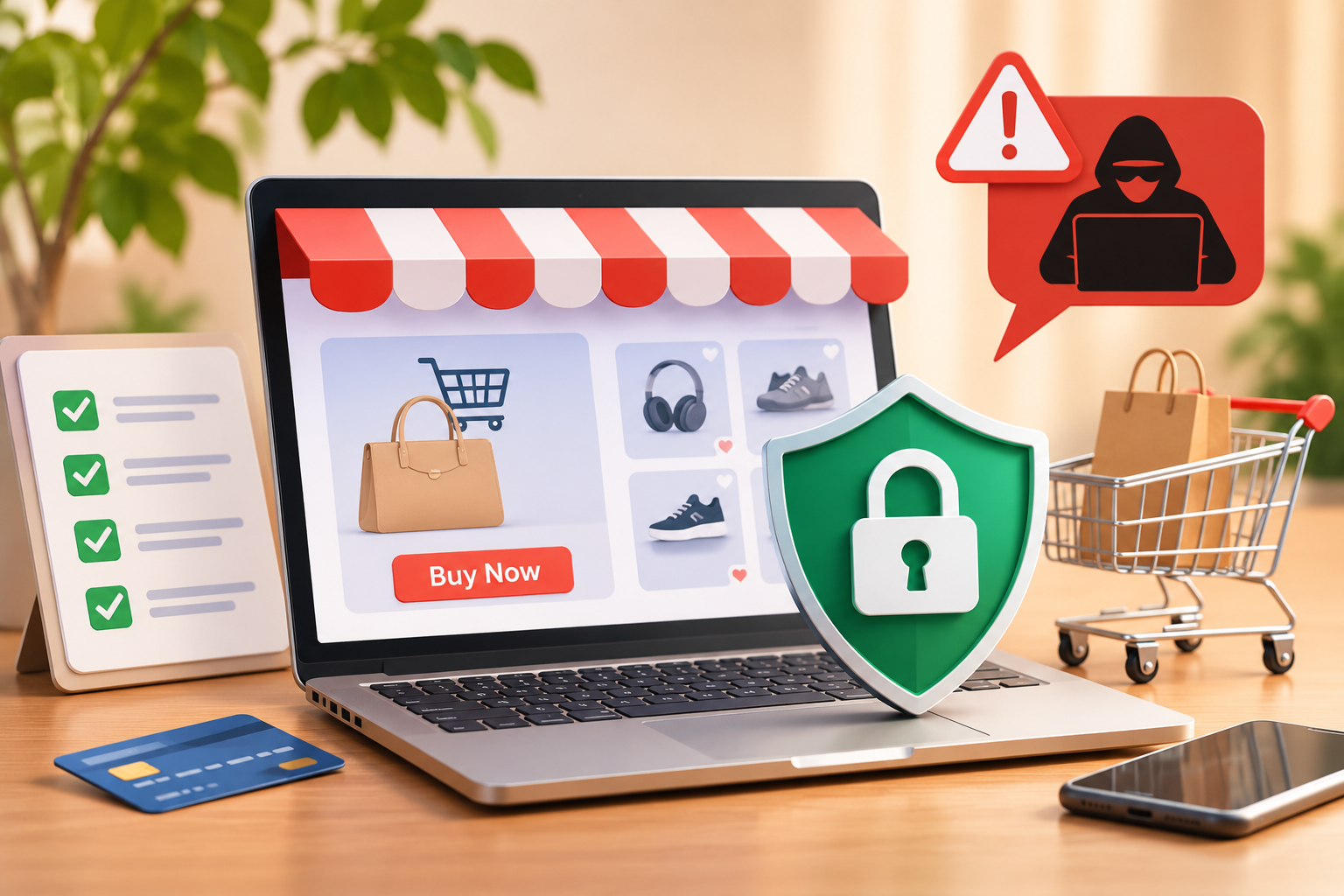
How to protect yourself from online shopping scams is something every internet user should understand before making a purchase. Online shopping makes it easy to buy clothes, electronics, beauty products, and household items from home. However, scammers also use fake websites, misleading advertisements, and fraudulent payment requests to steal money and personal information.
Some scam stores look professional and even copy the logos, product images, and layouts of genuine brands. Others advertise expensive products at unbelievable prices to convince shoppers to pay quickly. Once the payment is made, the product may never arrive, or the buyer may receive something completely different.
The good news is that a few simple precautions can help you shop more safely. In this guide, you will learn how online shopping scams work, how to recognise warning signs, and what to do if you think you have been scammed.
What Are Online Shopping Scams?
Online shopping scams happen when criminals deceive customers through fake stores, fraudulent sellers, misleading product listings, or payment tricks. Their goal may be to steal money, collect payment details, obtain personal information, or gain access to online accounts.
These scams can appear on social media, shopping marketplaces, search results, emails, text messages, and unfamiliar websites.
For example, you might see a branded smartphone advertised at an unusually low price. The seller claims the offer will expire within minutes and asks you to pay in advance. After receiving your payment, the seller disappears or blocks your account.
Other scams involve fake delivery notifications, counterfeit products, fraudulent refund offers, and messages claiming that an additional payment is required to release a parcel.
Understanding these methods is the first step towards protecting yourself.
1. Check the Website Before Buying Anything
One of the simplest ways to avoid online shopping scams is to investigate the website before placing an order.
Scammers often create websites that look similar to genuine online stores. They may use copied product photographs, brand logos, customer reviews, and professional-looking designs to appear trustworthy.
Before buying, check the following details:
- Website address: Look for misspellings, unusual extra words, or domains that imitate a well-known brand.
- Contact information: Check whether the seller provides a working customer service email, phone number, or business address.
- Company information: Look for details about the business, its return policy, and its shipping arrangements.
- Independent reviews: Search for feedback outside the seller’s own website.
- Website history: Investigate unfamiliar stores and look for credible information about how long they have operated.
You can also use Google’s Safe Browsing site status tool to check whether a website has been identified as unsafe.
Remember that a website appearing safe in a browser check does not guarantee that its seller is honest.
2. Be Careful With Deals That Look Too Good to Be True
Huge discounts can be tempting, especially during seasonal sales and shopping festivals. However, scammers often use unrealistic prices to make people act without checking the seller.
Imagine finding a laptop worth ?80,000 advertised for ?12,000 by an unfamiliar website. The store claims that only two units remain and asks you to pay immediately.
Instead of rushing, compare the price with established retailers and check whether the offer is genuine.
Watch out for these warning signs:
- Prices far below the normal market rate without a credible explanation
- Countdown timers designed to create panic
- Repeated messages saying the product is almost sold out
- Offers that require immediate payment to an unknown account
- Expensive branded products sold through recently created social media pages
A genuine discount is possible, but an unusually low price should encourage you to investigate further.
3. Research the Seller and Read Customer Reviews
Customer reviews can help you understand whether a seller delivers products as promised. However, fake reviews can also make fraudulent stores appear trustworthy.
Do not depend only on the star rating displayed on the seller’s website. Look for reviews across several independent sources and pay attention to specific details about delivery, product quality, and customer service.
Be cautious when you notice:
- Numerous reviews posted within a short period
- Repeated comments using almost identical wording
- Reviews that describe a different product from the one advertised
- Complaints about missing deliveries or refunds
- A seller who refuses to answer reasonable questions
For marketplace purchases, check the individual seller’s ratings and history, not just the reputation of the overall platform.
You can also search the store’s name alongside words such as “complaints,” “scam,” or “refund problems.” This may reveal concerns that are not visible on the seller’s own page.
4. Choose Secure Payment Methods
The payment method you choose can make a significant difference if a purchase goes wrong.
Whenever possible, use a recognised payment method that offers transaction records and a dispute process. Depending on your country and provider, credit cards and established digital wallets may provide useful protections.
Follow these precautions:
- Avoid transferring money directly to unknown sellers without verifying them.
- Do not pay using gift cards or cryptocurrency when an unfamiliar seller insists on these methods.
- Check the recipient and payment amount before confirming a transaction.
- Never share your banking password, card PIN, or one-time password (OTP) with a seller.
- Review the payment provider’s dispute and refund rules before purchasing.
A payment method does not guarantee that you will recover your money, so prevention remains important.
Also, remember that HTTPS and a padlock symbol do not prove that a store is genuine. They indicate that the connection is encrypted, but scammers can use encrypted websites too.
5. Avoid Suspicious Shopping Links
Scammers frequently distribute fake shopping links through SMS messages, emails, social media advertisements, and messaging apps.
A message might claim that a popular retailer is offering a limited-time sale. Another may say that your parcel is delayed and you must pay a small fee to complete delivery.
Clicking the link may take you to a fake website that asks for your login credentials, card details, or banking information.
To reduce this risk:
- Avoid clicking unexpected links offering prizes, discounts, or urgent refunds.
- Open your browser and type the retailer’s official address yourself.
- Use the official shopping app downloaded from a trusted app store.
- Verify delivery updates through the retailer’s or courier’s official website.
- Never enter payment details on a page reached through a suspicious message.
If a message appears to come from a company you trust, contact the company through its verified website or customer support channel instead of replying to the message.
6. Protect Your Personal and Banking Information
Online stores usually need certain information to process an order, such as your name, delivery address, and contact details. They should not need your banking password, card PIN, or OTP to complete an ordinary purchase.
Be suspicious if a seller asks you to provide unnecessary sensitive information.
You should also protect your shopping accounts by using a strong, unique password for each account. Enable two-factor authentication or passkeys where available, particularly on accounts that store payment information.
Other useful precautions include:
- Keep your phone, computer, browser, and shopping apps updated.
- Avoid saving payment details on unfamiliar shopping websites.
- Review bank and card statements regularly.
- Use a trusted internet connection when making payments.
- Limit the personal information you share with shopping apps.
These habits can reduce the risk of account compromise and financial fraud.
7. Watch Out for Fake Delivery and Refund Scams
Online shopping scams do not always happen before you buy something. Criminals may contact you after a genuine purchase by pretending to be a courier company, retailer, or refund department.
For example, you might receive a message claiming that your parcel cannot be delivered until you pay a small fee. Another message may offer a refund but direct you to a fake payment page.
Be careful if someone:
- Requests an unexpected delivery or customs payment through a suspicious link
- Asks for your OTP to issue a refund
- Tells you to scan a QR code to receive money
- Asks you to install an app to resolve a delivery problem
- Requests remote access to your phone or computer
Verify any delivery or refund issue through the official retailer or courier channel.
In India, remember that receiving money through a UPI payment does not normally require you to enter your UPI PIN. Never enter your PIN simply because someone claims it is necessary to receive a refund.
8. Understand Cash on Delivery and Its Limitations
Cash on delivery (COD) can reduce the risk of paying an unknown seller in advance. However, it does not automatically guarantee that the product is genuine or that you will receive what you ordered.
A fraudulent seller could still send an incorrect, damaged, or counterfeit item.
When using COD, check whether the marketplace allows you to inspect the package before accepting it. Read the delivery and return conditions carefully, and do not assume that every courier permits opening a parcel before payment.
For online purchases, the seller’s reputation, marketplace policies, and return options are just as important as the payment method.
9. Keep Proof of Your Purchase
Saving purchase records can make it easier to resolve problems with a seller or payment provider.
After placing an order, keep copies of:
- The order confirmation and receipt
- The product listing and advertised price
- The seller’s name and website address
- Payment confirmations and transaction references
- Delivery tracking information
- Messages exchanged with the seller
- The return, cancellation, and refund policy
If the seller fails to deliver the product or sends the wrong item, these records may help support a dispute.
Avoid sharing screenshots publicly if they contain your full card details, address, phone number, or other sensitive information.
10. What to Do If You Have Been Scammed
If you suspect an online shopping scam, act quickly. Early action may improve your chances of limiting the damage.
Step 1: Contact Your Bank or Payment Provider
If you have made a suspicious payment, contact your bank, card issuer, or payment provider using its official contact details. Explain what happened and ask whether the transaction can be stopped, disputed, or investigated.
If you shared your card details, ask whether the card should be blocked or replaced.
Step 2: Secure Your Accounts
If you entered your password on a suspicious website, change it immediately through the genuine service. If you reused that password elsewhere, change it on those accounts too.
Enable additional authentication and review recent account activity. If you installed an unfamiliar app at the scammer’s request, remove it and check your device for suspicious access.
Step 3: Save the Evidence
Keep screenshots, transaction IDs, order details, website addresses, messages, and any available seller information. Do not delete evidence before reporting the incident.
Step 4: Report the Scam
Use the official reporting channels available in your country.
- India: National Cyber Crime Reporting Portal — report cybercrime. If financial fraud has occurred, contact the relevant bank immediately and call India’s cybercrime helpline at 1930 as soon as possible.
- United States: Federal Trade Commission — Report Fraud.
- Other countries: Contact your local cybercrime reporting service, consumer protection agency, and payment provider.
Step 5: Do Not Pay More Money to Recover Your Loss
Scammers sometimes contact victims again, claiming they can recover the money for an upfront fee. These recovery offers may be another scam.
Be cautious of anyone promising guaranteed refunds in exchange for additional payment, cryptocurrency, gift cards, or remote access to your device.
Online Shopping Safety Checklist
Before completing your next purchase, use this quick checklist:
- Check the website address and seller’s reputation.
- Compare the price with other established retailers.
- Read independent reviews and the return policy.
- Use a recognised payment method with appropriate protections.
- Avoid suspicious links and unexpected payment requests.
- Never share your OTP, PIN, or banking password.
- Save the order confirmation and payment receipt.
- Monitor your account for unfamiliar transactions.
You do not need to stop shopping online to stay safer. You simply need to verify sellers, protect your information, and slow down when an offer or message seems suspicious.
Frequently Asked Questions
How can I tell if an online shopping website is fake?
Look for unusual website addresses, unrealistic discounts, missing contact details, suspicious payment requests, and independent complaints. A professional design or HTTPS connection alone does not prove that the seller is genuine.
Is it safe to buy products from social media advertisements?
Some legitimate businesses advertise on social media, but scammers also use paid advertisements and fake pages. Verify the seller independently, check its website and return policy, and avoid sending advance payments to unverified accounts.
What should I do if I paid for an order but never received it?
Contact the seller through verified details, preserve your order records, and contact your bank or payment provider to ask about dispute options. Report suspected fraud to the appropriate authorities.
Can I get my money back after an online shopping scam?
Recovery depends on the payment method, transaction circumstances, provider policies, and local laws. Contact your bank or payment provider as soon as possible. Be cautious of anyone demanding an upfront fee to recover your money.
Does a padlock icon mean an online store is trustworthy?
No. A padlock and HTTPS indicate an encrypted connection, not the honesty of the business. You must still verify the website address, seller, reviews, and payment process.
Final Thoughts
Online shopping scams can affect anyone, from first-time buyers to experienced internet users. Fake stores, unrealistic discounts, fraudulent delivery messages, and refund tricks are designed to make people act before checking the details.
The best defence is to verify the seller, use appropriate payment protections, keep your accounts secure, and avoid clicking unexpected links. If something goes wrong, contact your bank or payment provider quickly and report the incident through official channels.
A few careful checks before you buy can help protect your money, your personal information, and your peace of mind.

















This is a useful overview of the subject. The reminder to look at evidence and safety is especially valuable. The balanced tone is appreciated.
The points in this article are useful. The article highlights why informed choices matter. I found this discussion worthwhile.
A well-organized and informative post. This reinforces the value of looking beyond headlines and marketing claims. I hope to see more practical content in the future.
I found this post easy to follow. I like that the article keeps the discussion measured and reader-friendly. I found this discussion worthwhile.
I learned something useful from this post. It is sensible to consider the full picture rather than focusing on one detail. I look forward to reading more articles like this.
A well-organized and informative post. It is always worth checking sources and understanding the available evidence. The balanced approach is appreciated.
I like how clearly the subject is presented. The explanations make this topic feel less overwhelming. A follow-up article would be interesting.
Helpful information for readers researching this topic. I appreciate the focus on informed choices rather than quick promises. Good work keeping the discussion approachable.
I appreciate the effort behind this article. The article highlights why informed choices matter. I hope to see more content like this.
This is an informative and well-organized post. The points here encourage readers to think carefully about their options. I hope to see more content like this.
I learned something useful from this post. The clear structure makes it easier to follow the main ideas. The balanced tone is appreciated.
I enjoyed reading this guide. This is a reminder that general information cannot replace individual medical advice. This is a useful addition to online health resources.
This post offers a good starting point. Readers can use these points to prepare more focused questions for a professional. More practical explanations like this would be welcome.
The explanation is clear and practical. Reliable information can make it easier to know which questions to ask next. This is a good starting point for anyone learning about the topic.
I found this post easy to follow. This gives readers a useful foundation for further learning. Thanks again for sharing a useful resource.